



Why Bucharest Is Becoming One of the Most Interesting Cities in the Balkans
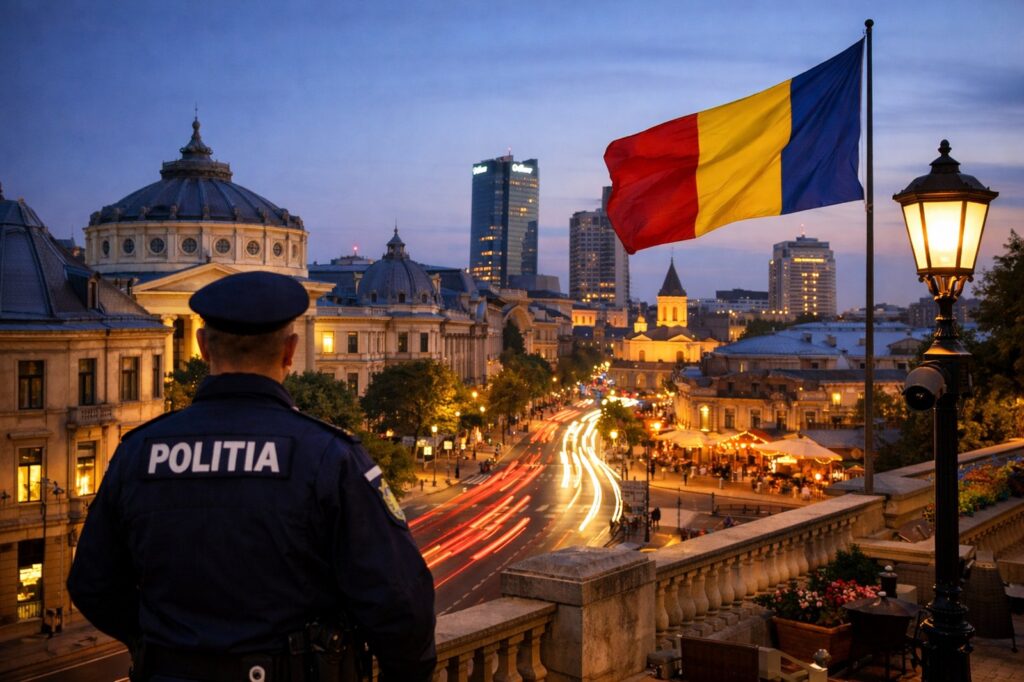
Why Bucharest Is Considered One of the Safer Capitals in Europe
Safety is one of the most important factors when choosing a travel destination. In recent years, concerns about terrorism, violent crime, and urban instability have influenced how tourists select cities to visit.
In this context, Bucharest stands out.
While no major European capital is completely risk-free, Bucharest consistently ranks as a relatively safe city for visitors when compared to many Western European counterparts.
Understanding why requires looking at several structural factors.
1. No Major Terrorist Attacks
Unlike cities such as Paris, Brussels, Berlin, London, or Madrid, Bucharest has not experienced major terrorist attacks in recent decades.
Romania is not considered a primary geopolitical target. It does not host the same level of symbolic international institutions or global political exposure as some Western capitals.
Additionally, Romania’s foreign policy positioning and internal security structures have historically kept the country outside the central focus of extremist networks operating in Western Europe.
This does not mean risk is zero. However, the country has not been at the center of large-scale extremist violence.
For travelers, that perception of stability matters.
2. Lower Violent Crime Rates
Compared to many large Western capitals, Bucharest has low levels of violent crime.
Serious violent incidents are rare in tourist areas. Organized crime does not visibly affect daily life in the city center. Most safety issues that tourists encounter involve minor offenses such as pickpocketing, which exist in virtually all major cities.
In contrast, some Western cities face higher rates of knife crime, gang-related incidents, or politically motivated unrest.
Bucharest does not currently experience those patterns at comparable levels.
3. Controlled Urban Density
Western European cities often struggle with high population density in historic centers combined with heavy tourism flows.
Bucharest, despite being large, is more spatially spread out. Tourist zones are active but not overcrowded year-round. This reduces tension, congestion, and opportunistic crime.
The Old Town is concentrated but monitored. Surrounding districts remain residential and stable.
Lower tourism saturation often correlates with fewer security incidents.
4. Strong Intelligence and Internal Security Framework
Romania is a member of both NATO and the European Union. Its intelligence and security institutions cooperate closely with Western partners.
Because Romania has historically remained outside high-risk extremist networks, security agencies have focused on prevention rather than reaction.
The absence of major incidents does not happen by accident. It reflects consistent monitoring and cooperation at the European level.
5. Social Structure and Cultural Factors
Romanian society tends to be socially cohesive. Family structures remain strong. Community ties are active. Violent street behavior is less normalized than in some large Western metropolitan areas.
Public nightlife exists, but large-scale unrest or riot culture is uncommon.
Political protests occur occasionally, as in any democracy, but they are generally peaceful and controlled.
This social stability contributes to an overall sense of safety.
6. Nighttime Safety in Tourist Areas
Bucharest’s central districts remain active late into the night. Restaurants, bars, and terraces create natural street presence.
Well-lit pedestrian areas, busy public spaces, and visible police patrols contribute to perceived and practical safety.
While tourists should always take normal precautions, central Bucharest does not have large no-go zones or heavily restricted areas comparable to certain Western cities.
7. Why Perception Matters in Tourism
Modern tourism is influenced not only by statistics but by perception.
Media coverage of incidents in Western Europe has shaped traveler behavior. Cities associated with repeated attacks often face long-term reputation challenges.
Bucharest does not carry that media burden.
For many visitors, choosing a destination that feels politically calm and socially stable provides reassurance.
A Balanced Perspective
No city is perfectly safe. Crime exists everywhere. Visitors should always remain aware of their surroundings.
However, when comparing European capitals by violent crime exposure, terrorist history, and visible instability, Bucharest consistently appears in a more stable category.
This safety, combined with affordability and cultural depth, contributes significantly to its growing appeal among international travelers.
